School Entry Assessments Explained: What Parents Need to Know
· 3 min read
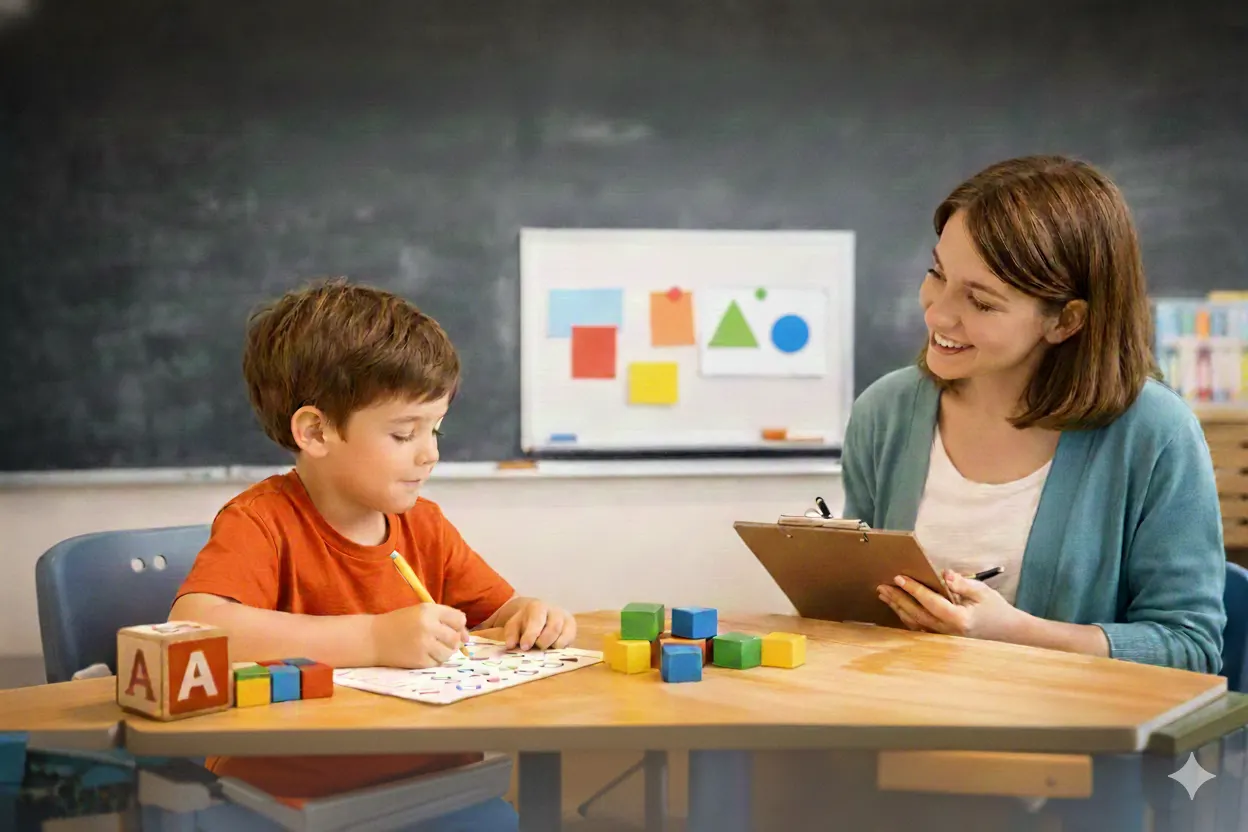
Have you just received the time and date for your child’s one-on-one school entry assessment? Feeling anxious about what it will involve is completely normal. If you’ve been worrying about starting school assessments or “tests,” you’re not alone. As a teacher, I see these concerns every year.
Good news: School entry assessments are not something to fear. They are simply a way for teachers to understand your child’s current skills and help them settle confidently into school.
This post explains what school entry assessments involve, what teachers observe, and why they are important — in plain, reassuring terms.
What Are School Entry Assessments?
- Teachers are observing children, not grading them.
- Activities are casual, interactive, and play-based to understand your child’s current skills.
- Vast variation in ability is normal; every child develops at their own pace.
- Mandatory in Australia, unless there are unique exemptions (special needs, medical issues, or language barriers).
How it happens:
- Parents get a time slot for their child to attend school.
- Assessments are conducted one-on-one, often by the classroom teacher.
- Information is used alongside classroom observations once school starts.
Tip: Bringing a favourite toy or book can help your child feel relaxed and start conversations naturally.
Why School Entry Assessments Are Important
Schools and education systems use this information to:
- Plan learning: Organise groups and tailor classroom experiences.
- Provide support: Identify children who may need extra help or extension.
- Inform policy: Understand trends across schools and allocate resources effectively.
Remember: This is not about judging children or parenting. It’s about supporting each child’s transition into school and helping them succeed.
What Teachers Observe During School Entry Assessments
- Early literacy skills
- Early numeracy skills
- Communication skills
- Social and emotional development
How School Entry Assessments Work
- Typically, one-on-one for 30–45 minutes (schools confirm timing).
- Typically, one-on-one for 30–45 minutes (schools confirm timing).
- Assessment formats vary slightly between schools, but core skills observed remain the same.
- Understanding the process helps parents feel more confident and prepared.
Common Parent Questions About School Entry Assessments
- Can my child fail or lose their spot?
No. School entry assessments are not pass or fail. They help teachers understand each child’s strengths so everyone can start school successfully.
- Does my child need to know all their letters or read?
No. Teachers look at potential, understanding, and curiosity, not perfection. Early skills are just a starting point, and with guidance, children can develop quickly once school begins.
- Can I stay in the room during the assessment?
Usually, parents are not in the room to observe independent skills and to avoid distractions. Schools may allow exceptions for anxious children or special considerations.
- Will my child be stressed or anxious?
Teachers make the experience calm and supportive, often using play-based activities. A little nerves are normal, but most children settle quickly with reassurance.
How can parents help their child feel ready for a school entry assessment?
- Talk about what to expect in a positive way.
- Play short, fun literacy and numeracy activities at home to support early learning and build familiarisation for a smoother transition into school.
- For step-by-step guidance on exactly what teachers look for in literacy-based assessments (and how you can support your child), Ready for School: A Parent’s Guide to Literacy-Based Entry Assessments walks you through everything clearly, helping parents prepare children without pressure.
Conclusion: Preparing Your Child for a Confident Start
- School entry assessments help teachers get to know your child and ensure a positive first year of school.
- They are supportive, not stressful.
- Many parents still feel unsure about what teachers are looking for, especially in literacy.
If you want to know exactly what teachers assess, Ready for School: A Parent’s Guide to Literacy-Based Entry Assessments walks you through it calmly, step by step.
The guide also provides easy, practical ideas to support the eight core early literacy skills that underpin a confident start — without pressure or overwhelm.

About the Author
Mrs W is a primary/elementary teacher with over 14 years of experience and has worked as a curriculum coordinator and learning specialist. She also completed postgraduate studies in Educational Neuroscience at the University of Melbourne. A mum of two, she is the creator of Ready for School: A Parent's Guide to Literacy-Based Entry Assessments, a research-informed guide used by parents and endorsed by educators, designed to make school entry assessments transparent and help children build confidence and foundational skills for a smooth start to school—and beyond.